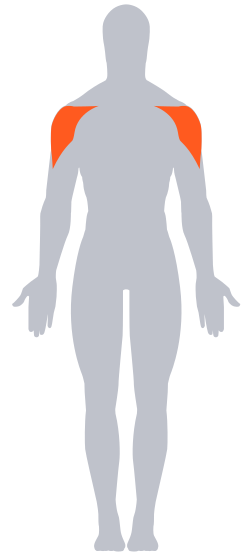
The Arnold Press is a dumbbell overhead press with a built-in rotation, named after Arnold Schwarzenegger. Where a standard shoulder press keeps your palms forward, the Arnold Press starts with your palms facing you at chin height and rotates them outward as you drive overhead. That extra rotation sweeps the dumbbells through a longer arc and forces the front, side, and rear delts to all contribute, making it one of the most complete single-movement shoulder builders. It is a smart pick when you want fuller delt development and more time under tension than a basic press delivers, without needing a barbell or machine.
How to do the arnold press
- Sit on an upright bench with back support and hold a dumbbell in each hand at the front of your shoulders, palms facing your body and elbows tucked in toward your ribs, as if at the top of a dumbbell curl.
- Brace your core, set your feet flat, and keep your lower back lightly pressed into the bench so your ribcage stays down.
- Begin pressing the dumbbells up and, as your arms rise, rotate your wrists so your palms turn to face forward by the time the weights pass your forehead.
- Continue pressing until your arms are nearly straight overhead, stopping just short of locking your elbows, with the dumbbells stacked over your shoulders.
- Pause briefly at the top with palms facing forward and shoulders down away from your ears.
- Lower under control, reversing the rotation so your palms turn back toward you as the dumbbells return to chin height.
- Finish each rep with elbows tucked and palms facing you, then repeat without bouncing out of the bottom.
Muscles worked
The primary muscle worked in the Arnold Press is the shoulders (deltoids). The rotation is what sets this exercise apart: starting with palms in emphasizes the anterior (front) deltoid, the mid-press rotation pulls in the lateral (side) deltoid, and the externally rotated path gives the posterior (rear) deltoid more work than a standard press. This is why the Arnold Press is known for hitting all three delt heads in one movement. The triceps act as the key secondary muscle, extending the elbow to finish each rep at lockout. The upper trapezius and serratus anterior assist by stabilizing and upwardly rotating the shoulder blades, while the core works isometrically to keep your torso upright and your ribcage from flaring.
Benefits
- Trains all three deltoid heads in a single movement, building rounder, more complete shoulders
- The rotation lengthens the range of motion and increases time under tension for more growth stimulus
- Builds overhead pressing strength and triceps lockout power with dumbbells alone
- Each arm works independently, exposing and correcting left-to-right strength imbalances
- Requires only a pair of dumbbells, making it easy to do at home or in a busy gym
Common mistakes
- Going too heavy and arching the lower back: drop the weight and brace your core so you press with your shoulders, not your spine.
- Rushing the rotation: turn the wrists smoothly throughout the press rather than flicking them at the last second.
- Flaring the elbows wide at the bottom: keep them tucked toward your ribs at chin height so the front delts stay loaded.
- Pressing the dumbbells forward instead of straight up: finish with the weights stacked over your shoulders, not out in front of your face.
- Locking the elbows hard and shrugging at the top: stop just short of lockout and keep your shoulders pulled down away from your ears.
- Bouncing or letting the weights drop fast: lower under control and reverse the rotation deliberately to keep tension on the delts.
Form tips
- Sit on a bench with an upright back pad to protect your lower back and keep your torso stable.
- Sync the rotation with the press so palms finish facing forward exactly as the dumbbells clear your forehead.
- Keep your ribcage down and core braced throughout to prevent the back from arching as you fatigue.
- Use a controlled tempo, taking about two to three seconds to lower so the delts do the work, not momentum.
- Start lighter than your standard dumbbell press, since the rotation makes the lift harder to control.
Sets & reps
For general muscle growth, 3 sets of 8 to 12 reps with about 90 seconds of rest is the reliable default and matches most hypertrophy programs. If your goal is strength, work in the 5 to 8 rep range with heavier dumbbells and longer rest of 2 to 3 minutes, keeping strict form. For shoulder endurance or higher-volume pump work, use 12 to 15 reps with lighter loads and shorter 45 to 60 second rests. Because the rotation taxes the smaller stabilizers, treat the Arnold Press as a primary or secondary shoulder movement early in your session rather than a heavy maxing-out lift, and progress the weight gradually once you can hit the top of your rep range with clean form.
Frequently asked questions
What muscles does the Arnold Press work?
The Arnold Press primarily works the shoulders, specifically all three deltoid heads. The palms-in start emphasizes the front delt, the rotation brings in the side delt, and the externally rotated path engages the rear delt more than a standard press. The triceps assist at lockout, and the core and traps stabilize.
Is the Arnold Press better than the regular shoulder press?
Neither is strictly better; they serve different goals. The Arnold Press uses rotation to hit all three delt heads and adds time under tension, making it great for complete shoulder development. The standard dumbbell press lets you handle heavier loads for raw pressing strength. Many lifters program both.
Why is it called the Arnold Press?
The exercise is named after Arnold Schwarzenegger, who popularized the rotating dumbbell press during his bodybuilding career. He used the rotation to maximize deltoid involvement and shoulder development, and the variation took his name as it spread through bodybuilding gyms.
How heavy should I go on the Arnold Press?
Start lighter than your usual dumbbell shoulder press, because the rotation makes the weight harder to control and increases the demand on your stabilizers. Pick a load you can press for 8 to 12 clean reps without arching your back, then add weight gradually as your control improves.
Should I do the Arnold Press seated or standing?
Seated with an upright back pad is best for most lifters, since it supports the lower back and removes leg drive so the shoulders do the work. Standing is an advanced option that demands more core stability but tempts you to cheat with your legs and arch your back, so master the seated version first.
Is the Arnold Press good for beginners?
It is rated intermediate because the rotation requires coordination and shoulder control that beginners are still developing. Newer lifters should build a base with the standard dumbbell shoulder press first, then add the Arnold Press once they can press with stable, pain-free shoulders and clean form.