The dumbbell shoulder press is one of the most effective ways to build round, capped shoulders and pressing strength overhead. Because each arm works independently, dumbbells expose and correct side-to-side imbalances that a barbell can hide, and they let your wrists and elbows travel a more natural path. It's beginner-friendly yet scales endlessly: you can perform it seated for stability or standing for more core demand. Done well, it carries over to the bench press, push-ups, and any task that involves pushing weight above your head, making it a staple in nearly every upper-body program.
How to do the dumbbell shoulder press
- Sit on a bench with back support or stand tall with feet shoulder-width apart, holding a dumbbell in each hand.
- Bring the dumbbells up to shoulder height with palms facing forward, so the weights sit just outside your shoulders at roughly ear level.
- Set your elbows slightly forward of your torso (around 30 degrees) rather than flared straight out to the sides, and brace your core hard.
- Press both dumbbells up and slightly inward, exhaling as you drive them overhead until your arms are nearly locked out and the weights are stacked over your shoulders.
- Pause briefly at the top without shrugging or letting your lower back arch.
- Lower the dumbbells under control back down to ear height, feeling a stretch across the front of your shoulders.
- Repeat for your target reps, keeping the descent slower than the press.
Muscles worked
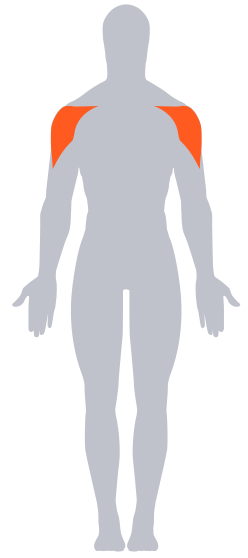
The primary muscle worked is the front delts (anterior deltoids), the muscle on the front of your shoulder responsible for raising and pressing the arm overhead; it does the bulk of the work driving the dumbbells from shoulder height to lockout. The triceps act as the key secondary muscle, taking over to extend the elbows and finish the lockout at the top of each rep. The lateral (side) delts and upper traps assist with shoulder stability and elevation, while your core, including the abs and spinal erectors, works isometrically to keep your torso rigid and prevent your lower back from arching as the load travels overhead.
Benefits
- Builds bigger, rounder front delts for fuller-looking shoulders and a broader upper body.
- Trains each arm independently, correcting strength imbalances a barbell can mask.
- Strengthens overhead pressing power that carries over to the bench press and push-ups.
- Beginner-friendly and easy to scale by adjusting weight or switching between seated and standing.
- Reinforces core and trunk stability, especially when performed standing.
Common mistakes
- Flaring the elbows fully back in line with your ears: keep them slightly forward to protect the shoulder joint and keep the delts loaded.
- Arching the lower back to heave the weight up: brace your core and squeeze your glutes so the press comes from your shoulders, not your spine.
- Lowering only halfway: bring the dumbbells down to ear level on every rep to train the delts through a full range of motion.
- Pressing the dumbbells too far apart or banging them together at the top: drive them up and slightly in so they finish stacked over your shoulders.
- Going too heavy and turning it into a leg-driven push press: use a weight you can press strictly with controlled tempo.
- Shrugging the shoulders up toward the ears at lockout: keep the traps relaxed and let the delts do the pressing.
Form tips
- Brace your core hard before every rep, as if bracing for a punch, to lock your ribcage down and protect your lower back.
- Keep your wrists stacked directly over your elbows so force travels straight up, not back into your joints.
- Lower the dumbbells slower than you press them to build control and add time under tension.
- Use a seated bench with back support when learning the movement, then progress to standing for more core involvement.
- Press the dumbbells slightly inward so they finish over your shoulders, keeping tension on the front delts.
Sets & reps
For most lifters, 4 sets of 8 to 12 reps with about 90 seconds of rest is an ideal default for building shoulder size and is the recommended starting point for this movement. For hypertrophy (muscle growth), stay in the 8 to 12 rep range using a weight that leaves one or two reps in reserve. For strength, drop to 4 to 6 reps with heavier dumbbells and rest 2 to 3 minutes between sets. For muscular endurance, perform 15 to 20 reps with lighter weights and shorter rest. Beginners should start light to master the pressing path before adding load.
Frequently asked questions
Is the dumbbell shoulder press good for beginners?
Yes. It's a beginner-friendly push exercise that builds the front delts while teaching a safe overhead pressing pattern. Dumbbells let each arm move independently and follow a natural path, which is easier on the wrists and shoulders than a barbell. Start light, master the form, then add weight gradually.
Should I do the dumbbell shoulder press seated or standing?
Both work. Seated with back support gives more stability, letting you focus purely on the shoulders and often handle slightly more weight. Standing recruits your core and trunk for stabilization and carries over to real-world pressing. Beginners often start seated, then progress to standing as their core strength and technique improve.
What muscles does the dumbbell shoulder press work?
The primary muscle is the front delts (anterior deltoids), which drive the dumbbells overhead. The triceps assist by extending the elbows to finish the lockout. The side delts, upper traps, and core also contribute, stabilizing the shoulders and keeping your torso rigid as the weight travels overhead.
How low should I lower the dumbbells?
Lower the dumbbells under control to about ear height, where you feel a stretch across the front of your shoulders. Stopping short cheats the delts out of range of motion, but dropping the elbows far below the shoulders can overstress the joint. Ear level is the sweet spot for most lifters.
Why shouldn't I flare my elbows straight out to the sides?
Flaring the elbows fully back in line with your ears places the shoulder joint in a vulnerable position and shifts tension away from the front delts. Keeping your elbows slightly forward, around 30 degrees from your torso, protects the joint, keeps the delts loaded, and lets you press more weight safely.
How much weight should I use for dumbbell shoulder press?
Pick a weight you can press strictly for your target reps without arching your back or using your legs to heave it up. For 8 to 12 reps, that usually means stopping one or two reps shy of failure. If your form breaks down or you can't control the descent, the dumbbells are too heavy.